34ºc, Sunny

NHRC Takes Suo Motu Cognizance of Alleged Human Rights Violation in Thailand
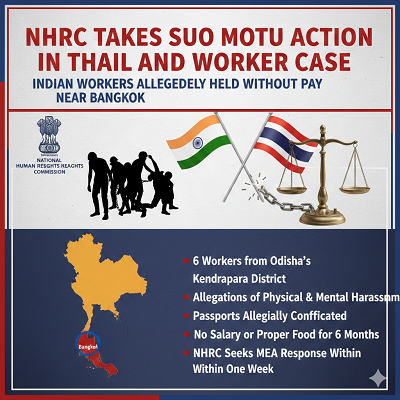
The National Human Rights Commission (NHRC), India, has taken suo motu cognizance of media reports alleging that at least six Indian workers from Kendrapara district in Odisha have been held captive by their employer for the past six months near Bangkok, Thailand.
According to reports published on 19 February 2026, the matter came to light on 17 February 2026 when the victims recorded a video message narrating their ordeal. The workers alleged that they were confined inside a factory, subjected to physical and mental harassment, denied wages, and deprived of adequate food.
Allegations of Passport Seizure and Forced Labour
As per the reports, the workers had travelled to Thailand in August last year through a labour contractor who promised them well-paid jobs. However, upon arrival, they were allegedly forced to work 12 hours daily in a plywood factory without receiving salary or proper meals.
The victims have also alleged that their passports were confiscated by the employer, restricting their movement and preventing them from returning to India.
NHRC Seeks Response from Ministry of External Affairs
Observing that the allegations, if true, constitute a serious violation of human rights, the NHRC has issued a notice to the Ministry of External Affairs (MEA). The Commission has asked the Ministry to inform within one week whether any assistance can be provided to the families of the affected workers.
The workers have appealed to Indian authorities for immediate intervention and assistance in facilitating their safe return to India.
Human Rights and Migrant Worker Protection
The incident highlights concerns surrounding the safety and welfare of Indian migrant workers abroad. The NHRC’s intervention underscores the importance of protecting citizens’ rights and ensuring accountability in cases involving alleged exploitation overseas.
Further developments are expected once the Ministry of External Affairs submits its response to the Commission.