34ºc, Sunny

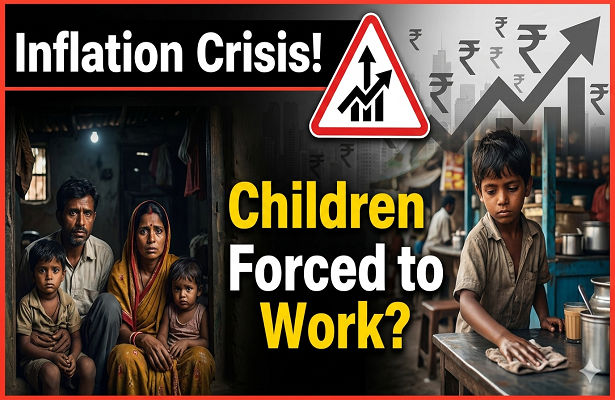
India’s latest Periodic Labour Force Survey (PLFS) data for March 2026 has sparked concerns about the growing pressure on households amid rising living costs. While the report by the Ministry of Statistics and Programme Implementation does not directly mention child labour, the trends in employment and labour participation hint at underlying economic stress that could be affecting families across the country.
📊 Decline in Labour Participation
According to the report, the Labour Force Participation Rate (LFPR) for individuals aged 15 years and above stood at 55.4% in March 2026, slightly down from 55.9% in February 2026. This marginal decline suggests that fewer people are actively participating in the workforce.
More concerning is the drop in female labour force participation, which fell to 34.4% from 35.3% in the previous month. Lower participation by women often reflects limited job opportunities or increased household burdens—both of which can indirectly impact children’s roles within families.
👩🌾 Rural vs Urban Reality
The report highlights a clear divide between rural and urban India. Rural LFPR stood at 58.0%, while urban LFPR remained stable at around 50.3%. Female participation in rural areas (38.9%) was significantly higher than in urban areas (25.2%), yet both segments showed signs of stagnation or decline.
These patterns suggest that while rural families are more engaged in economic activities, they may also be more vulnerable to financial shocks.
📉 Slight Rise in Unemployment
The Unemployment Rate (UR) increased slightly to 5.1% in March 2026, compared to 4.9% in February. Urban unemployment also rose, indicating that job availability may not be keeping pace with demand.
Even a small rise in unemployment can strain household incomes, especially for low-income families already struggling with inflation.
📌 What Does This Mean for Families?
Although the PLFS data focuses on individuals aged 15 and above, the broader economic signals—
- declining participation,
- stagnant employment ratios, and
- rising unemployment—
point toward increasing financial pressure on households.
In such situations, vulnerable families may resort to coping mechanisms, which can sometimes include engaging younger members in income-generating activities. However, it is important to note that the report does not provide direct evidence of child labour trends.
📊 Survey Coverage
The March 2026 estimates are based on a large sample of 3,75,262 individuals, including:
- 2,13,984 from rural areas
- 1,61,278 from urban areas
📍 Conclusion
The PLFS March 2026 report reflects a largely stable yet slightly weakening labour market, with small declines in participation and a mild increase in unemployment. While it does not directly confirm that children are entering the workforce, the economic conditions highlighted in the data raise important questions about how families are coping with rising costs.
As inflation continues to impact household budgets, ensuring job creation, income stability, and social protection remains crucial to prevent vulnerable groups—especially children—from being pushed into work.